Not All Instant Games Are Created Equal: A Player's Guide to Finding Better Odds at the Virtual Table
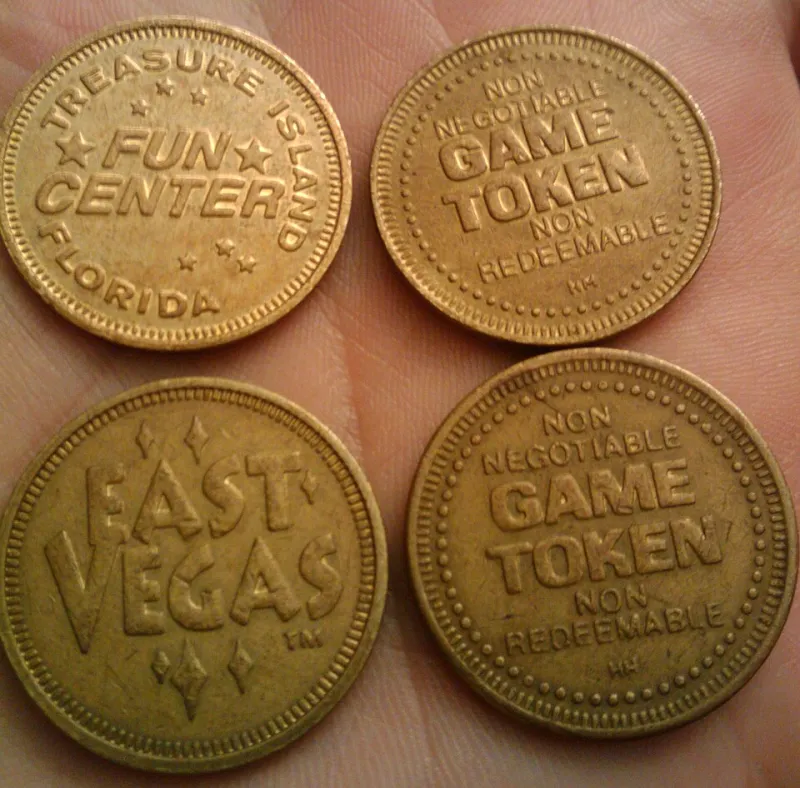
Photo: Jon Weber from Winter Springs, USA, CC BY 2.0, via Wikimedia Commons
The instant casino lobby can feel like a candy store — bright, overwhelming, and full of things that look equally appealing. But just like a candy store, some choices are going to cost you a lot more than others. The games sitting side by side in that grid have wildly different mathematical profiles, and the one you pick has a bigger impact on your results than almost any other decision you'll make as a player.
This isn't about finding a guaranteed winner — that doesn't exist. It's about understanding which games give you a fighting chance and which ones are quietly stacked in ways that most players never stop to examine.
The Concept of House Edge (And Why It Matters More in Fast Games)
Every casino game has a built-in mathematical advantage for the house. That's called the house edge, and it's expressed as a percentage of each bet the casino expects to keep over time. A house edge of 5% means that, statistically, for every $100 wagered, the house keeps $5.
In a slow-paced game, that edge grinds you down gradually. In an instant game where you might complete 300-400 rounds per hour, that same edge hits your bankroll at a dramatically accelerated rate. Speed amplifies everything — including the math working against you.
This is why game selection matters so much in instant gaming specifically. A 1% difference in house edge might feel abstract, but multiply it across hundreds of fast rounds and it becomes very concrete, very quickly.
Slots: High Entertainment, Higher Cost
Let's start with the most popular category in any instant casino lobby: slots. These are the flashiest, loudest, most visually engaging games on the platform — and they tend to carry some of the highest house edges you'll find.
Most online slots operate with house edges somewhere between 3% and 10%, depending on the game and provider. Some specialty or branded slots sit even higher. The theoretical return-to-player (RTP) figure — the flip side of house edge — is often listed in the game's info section, and anything below 95% is worth approaching carefully.
Slots also come with high volatility options, meaning long stretches of losses punctuated by occasional big wins. High-volatility slots can be thrilling, but they eat bankrolls fast if you're not capitalized for the dry spells. Low-volatility slots pay out more frequently but in smaller amounts — better for stretching a session, less exciting for the highlight reel.
What to look for: Seek out slots with RTPs of 96% or higher. That's a house edge of 4% or less, which is on the better end of the slot spectrum. Many reputable providers publish these figures, so it's worth spending 30 seconds to check before you spin.
Table Game Variants: Where the Math Gets Friendlier
If slots are the flashy end of the spectrum, digital table game variants are where the math tends to work more in the player's favor — sometimes significantly so.
Blackjack variants, for example, can carry house edges as low as 0.5% when played with basic strategy. Even in simplified instant-play formats that remove some strategic complexity, you're typically looking at house edges well below 2%. That's a dramatic improvement over the average slot.
Baccarat is another underrated option. The banker bet in baccarat carries a house edge of roughly 1.06%, making it one of the most player-friendly wagers in any casino format. It's also fast, simple, and requires zero strategic expertise — you're essentially just picking a side.
Instant roulette is popular in quick-play lobbies, and it's worth knowing the difference between variants. American roulette, with its double-zero wheel, carries a house edge of about 5.26%. European roulette drops that to 2.7% by removing one zero. That's nearly half the house edge for the exact same game structure — just pick the right wheel.
What to look for: Blackjack with basic strategy guidance, European or French roulette variants, and banker bets in baccarat are your best mathematical allies in the table game section.
Specialty Games: Proceed With Caution
This is the wild card category — instant scratch cards, crash games, virtual sports, keno, and other novelty formats that don't fit neatly into slots or tables. These games are often the most opaque when it comes to published odds.
Keno, for instance, is notorious for high house edges — often 20-35% depending on the pay table. That's not a typo. You can lose a third of your expected wager to the house on every round. Keno can be entertaining in small doses, but it's not a game you want to play as your primary session activity if bankroll longevity matters to you.
Crash games and instant win scratch formats vary wildly by provider. Some publish RTPs clearly; others don't. As a general rule, if you can't find the house edge or RTP for a specialty game within a minute of looking, treat it as a high-risk choice and size your bets accordingly.
What to look for: Transparency. If the provider publishes clear RTP data for a specialty game and it's at 95% or above, it may be worth a look. If the info isn't available, proceed with small bets only.
How to Apply This at Instant Casino 3
The goal here isn't to take all the fun out of the experience — it's to make sure the fun lasts longer. A few practical habits will go a long way:
- Check RTPs before you play. Most game providers include this in the info or rules section. Thirty seconds of reading could save you real money.
- Rotate toward table games when your bankroll is tight. The math is simply friendlier, and that matters when you're working with a limited budget.
- Treat specialty games as a small slice of your session, not the main event, unless you've verified the odds are reasonable.
- Compare variants. European roulette versus American roulette is the same game with a totally different financial profile. Same goes for different blackjack rule sets.
Instant Casino 3 is all about fast, engaging gaming — and you can absolutely get that experience while making smarter choices about where your money goes. The players who last longest and have the most fun aren't the ones ignoring the math. They're the ones who figured out how to use it.
Play instant. Play informed.