Speed Thrills, But Do Speed Wins? The Truth About Fast Games and Your Brain
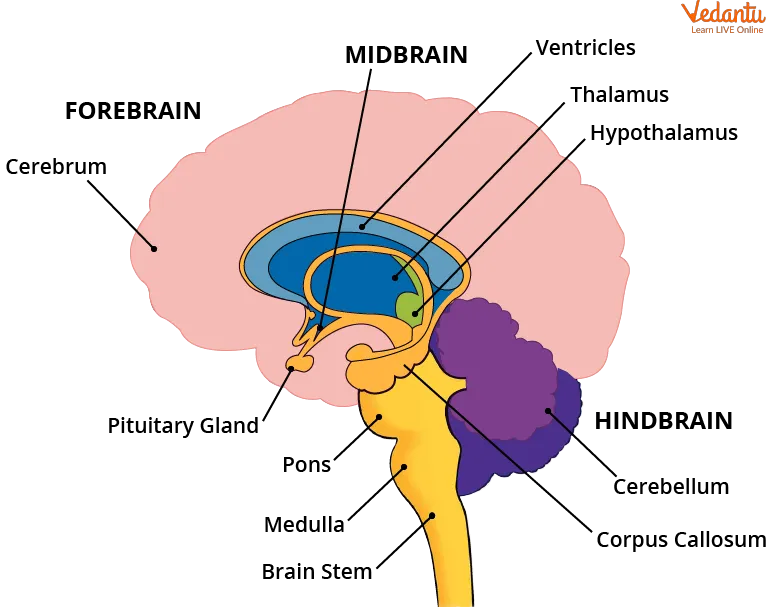
Photo: brain neurons glowing with casino slot machine overlay digital art, via www.vedantu.com
There's something undeniably satisfying about a game that moves fast. You spin, the reels blur, symbols land, and before your coffee gets cold, you've played a dozen rounds. At Instant Casino 3, speed is kind of our whole thing — and for good reason. Players love it. But here's a question worth asking: does playing faster actually make you win more, or does it just feel that way?
The answer is more interesting than a simple yes or no.
The Illusion of Momentum
When games move quickly, your brain does something clever and slightly sneaky — it starts connecting events that aren't actually connected. Psychologists call this the "hot hand fallacy," a cognitive bias borrowed from basketball where people believe a player on a scoring streak is more likely to score again. In casino gaming, the same wiring fires up. Win three fast rounds in a row, and your brain whispers, you're on a roll.
But here's the math reality: each spin on a slot or instant game is an independent event. The outcome of round 47 has absolutely zero relationship to round 46. The random number generator doesn't have memory. It doesn't care about your streak.
Fast games amplify this illusion because there's less time between events for rational thought to break in. Slow games give your brain a moment to reset. Rapid-fire gameplay keeps the emotional engine running hot, which makes perceived momentum feel more real — and more exciting — than it actually is.
Why Small Wins Hit Different at High Speed
Here's where things get genuinely fascinating. In behavioral economics, there's a concept called "temporal discounting" — the idea that rewards feel more valuable when they arrive quickly. A win that lands two seconds after your bet triggers a stronger dopamine response than the same win arriving after a 30-second wait.
Instant games are essentially optimized for temporal discounting. The near-instant feedback loop between bet and outcome means your brain's reward system lights up faster and more frequently. Even small wins — the kind that return less than your original wager — register as satisfying because they're immediate.
This creates what you might call the speed-win paradox: the faster the game, the more even a modest return feels like a genuine victory. A $0.40 return on a $0.50 spin technically means you lost ten cents. But at high speed, with sound effects and animations firing off, your brain often logs it as a win. Researchers refer to these as "losses disguised as wins," and they're far more common in rapid-play formats than in slower, traditional table games.
Does Speed Actually Change Your Odds?
Short answer: no. The return-to-player (RTP) percentage on any given game stays fixed regardless of how fast you play it. A slot with a 96% RTP will maintain that mathematical expectation whether you're spinning once a minute or once every three seconds.
What speed does change is how quickly you cycle through your bankroll. Play 10 spins an hour at $1 each, and you're risking $10 per hour against the house edge. Play 300 spins an hour at the same stake, and you're putting $300 through the machine. The house edge percentage hasn't changed — but its real-dollar impact on your session has multiplied dramatically.
This is the part most players don't stop to calculate in the middle of an exciting session, and it's worth keeping in your back pocket every time you fire up a fast game.
The Satisfaction Factor Is Real, Though
None of this means instant gaming is a trap or that fast play is inherently bad for you. The psychological satisfaction of rapid gameplay is genuine, even if some of the "win" perception is a brain trick. Entertainment value is real value. If a 15-minute session of high-speed slots at Instant Casino 3 leaves you feeling entertained and energized, that experience has worth — the same way a movie ticket or a round of mini-golf does.
The key is knowing what you're actually buying. You're buying stimulation, entertainment, and that sharp little dopamine hit of immediate feedback. That's a legitimate trade when you go in with eyes open.
Staying Grounded While Playing Fast
So how do you enjoy the speed without letting your brain's quirks work against you? A few practical anchors help:
Track actual outcomes, not feelings. It sounds boring, but glancing at your real balance rather than relying on your emotional sense of how the session is going keeps you calibrated. The number doesn't lie the way feelings do.
Set a time limit before you start. Fast games can compress time perception — 20 minutes can feel like five. Decide your session length upfront and use your phone's timer if needed.
Recognize losses disguised as wins. If the game celebrates a return that's less than your bet, remind yourself that's still a net loss, even if it sounds like a jackpot.
Slow down voluntarily sometimes. Pausing between spins — even for just a few seconds — interrupts the momentum illusion and helps you make more deliberate choices about continuing or stopping.
The Bottom Line
Fast games feel like better wins because your brain is wired to interpret speed and immediacy as success. The psychology is real, the entertainment is real, but the mathematical edge doesn't shift based on tempo. Understanding that distinction doesn't make instant gaming less fun — if anything, it makes you a smarter, more intentional player.
At Instant Casino 3, we're all about the thrill of playing instant. Just make sure the thrill is working for you, not instead of you.