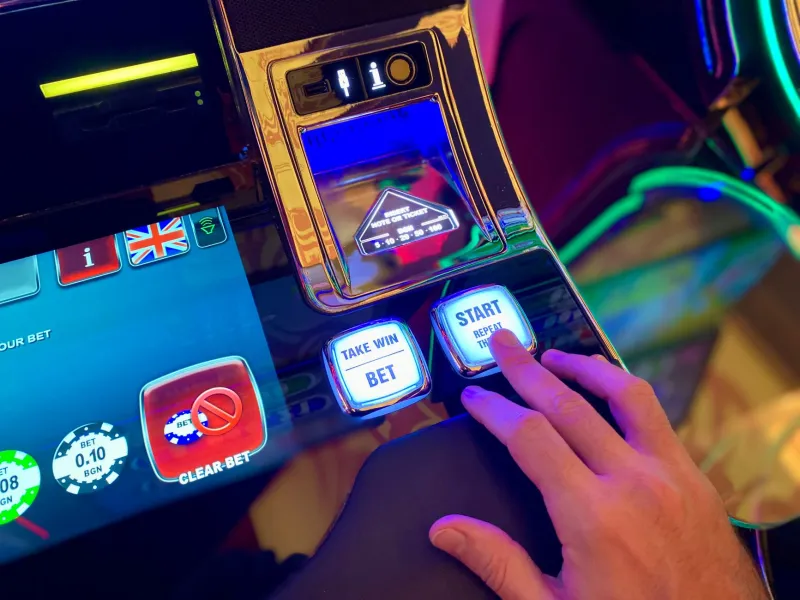
Your Brain Is Lying to You: How Instant Games Blur the Line Between Winning and Losing

Here's a scenario that probably sounds familiar. You sit down for what feels like a decent session at Instant Casino 3, spin through a bunch of rounds, catch a few small wins, and walk away feeling pretty neutral — maybe even good. Then you check your balance and realize you're down significantly more than you thought. The numbers don't match the feeling. How does that happen?
The short answer: your brain is not built for the speed of instant gaming. And when you understand why, the whole experience starts to make a lot more sense.
The Brain's Accounting System Has a Speed Limit
Your brain processes wins and losses through a system that involves dopamine, the prefrontal cortex, and something researchers call the reward evaluation network. Under normal circumstances — say, playing a slow hand of poker or watching a sports bet play out — this system has enough time to register what just happened, attach an emotional weight to it, and update your internal sense of where things stand.
Instant games don't give it that time.
When you're running through spins at the pace that platforms like Instant Casino 3 are designed for, you might complete 20 or 30 gaming cycles in the time it would take a traditional casino player to finish a single hand. Each of those cycles triggers a partial response in your brain's reward system — a flicker of anticipation, a flash of outcome, a micro-reaction — but none of them get fully processed before the next one starts.
The result is a kind of neurological pile-up. Wins and losses stack on top of each other faster than your brain can sort them out.
Why Small Wins Hit Harder Than Big Losses
Here's where it gets genuinely interesting — and a little counterintuitive. In rapid-fire gaming environments, your brain tends to weight wins and losses very differently, and not in the way you'd expect.
Even a modest win — a $5 payout, a small bonus trigger, a near-miss that resolves favorably — produces a measurable dopamine response. That response is immediate, it's visceral, and it registers clearly in your memory of the session.
A loss, on the other hand, especially a small incremental one, barely moves the needle emotionally. Losing $15 across five consecutive spins doesn't feel like losing $15. It feels like nothing. It's absorbed into the background noise of the session.
This asymmetry is well-documented in behavioral economics. Researchers have found that the frequency of positive feedback matters enormously to how we evaluate an experience overall. Even when the math is clearly negative, a session peppered with small wins can feel rewarding because those wins were salient — they stood out, they registered, they stuck.
The losses, meanwhile, got lost in the shuffle.
The Compression Problem
There's another layer to this that specifically affects instant game players: time compression.
When you compress many gaming cycles into a short window, you're not just speeding up the action — you're fundamentally changing how your brain encodes the experience as a memory. Research in cognitive psychology suggests that our brains don't remember time in proportion to how much of it passed. Instead, we remember events. More specifically, we remember distinct, emotionally marked moments.
In a fast-paced instant gaming session, most of those marked moments are wins. Losses blur together. Wins stand apart.
So when you try to mentally reconstruct what happened during your session, you're working from a distorted archive. The wins are there, clear and present. The losses have largely dissolved into a vague sense of "some spins that didn't go anywhere." You end up with a highlight reel when what you actually need is a full ledger.
This is why so many players at fast-paced platforms genuinely can't tell whether a session went well or badly without checking the actual numbers. It's not carelessness. It's just how memory works under those conditions.
The Numbing Effect Is Real — and It Compounds
Play long enough in any single session and another phenomenon kicks in: emotional numbing.
Your brain's dopamine system is adaptive. It calibrates itself based on what's happening around it. Early in a session, each spin carries some emotional charge. But as the session extends, the system starts to normalize the stimulation. Wins feel less exciting. Losses feel less alarming. The whole experience flattens out into a kind of low-grade autopilot.
This is actually a defense mechanism — your brain is trying to regulate itself. But in a gaming context, it has an unfortunate side effect: it removes the emotional signals that would otherwise tell you to stop.
Fear of loss is one of the most powerful behavioral brakes humans have. When that signal gets muted by numbing, the natural stopping cues disappear. You keep playing not because you're having a great time, but because nothing is clearly telling you to quit.
What You Can Actually Do About It
Understanding the neuroscience doesn't automatically fix the problem, but it does give you some real tools to work with.
Check your balance on a schedule, not a feeling. Because your emotional read on a session is unreliable, your actual balance needs to do the work your gut can't. Set a rule: every 10 or 15 minutes, stop and look at the number. Not the vibe — the number.
Set a hard exit point before you start. The time to make decisions about when to quit is before the session begins, when your brain isn't in the middle of processing a stream of fast outcomes. Decide on a loss limit and a time cap, and treat them as non-negotiable.
Name the wins and losses out loud. This sounds a little strange, but verbalizing outcomes — even just internally — forces your brain to actually process them rather than letting them blur past. "That was a $20 loss" lands differently than just watching a spin resolve and moving on.
Take real breaks. Not a pause between spins — an actual stop. Stand up, walk away from the screen for a few minutes. This gives your brain's accounting system a chance to catch up, and it disrupts the numbing effect before it gets too deep.
Playing Fast Doesn't Have to Mean Playing Blind
Instant games are genuinely fun. The speed is part of the appeal — there's a reason platforms built around quick, accessible play have become so popular. But that same speed is what makes intentional play so important.
Your brain isn't broken. It's just not designed for the pace that modern instant gaming moves at. Once you understand that the emotional feedback you're getting during a session is an incomplete and often misleading picture, you can stop relying on it to make decisions and start using actual information instead.
Spin fast, sure. But know what's actually happening while you do.