Game-Hopping Is Quietly Draining Your Bankroll — Here's the Science Behind Why
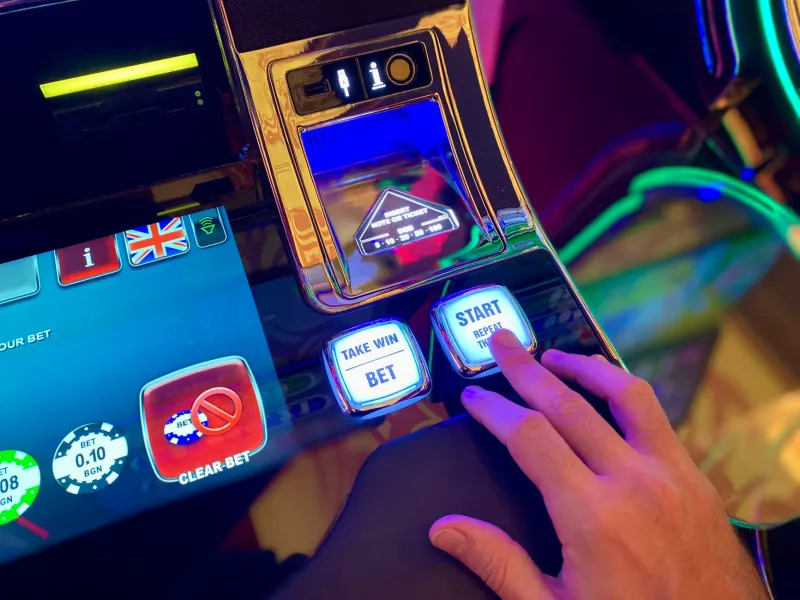
There's a moment every instant casino player knows well. You've been spinning on one slot for a while, the wins aren't coming, and suddenly the urge hits: maybe a different game will treat me better. So you click over. New graphics, new sounds, new vibe — and somehow, it feels like you've hit the reset button.
Except you haven't. Not even close.
Your bankroll doesn't care which game you're playing. But your brain? It absolutely does — and that disconnect is costing players far more than they realize per session.
Why Switching Games Feels Like a Fresh Start
Here's the core issue: human brains are wired to treat novelty as a kind of mental punctuation. When you move from a five-reel slot to a fast-play table game, your mind files the previous game away as its own separate chapter. The losses from that chapter feel closed, done, archived.
Psychologists call this mental accounting — the tendency to mentally sort money into different buckets based on context rather than treating it as one unified pool. When you hop to a new game, you're essentially opening a fresh mental ledger, even though your actual balance is the running total of everything that came before.
This is why players routinely underestimate how much they've spent in a single session. They're not lying to themselves on purpose. Their brains are genuinely processing each game switch as a kind of psychological reset, making the cumulative damage nearly invisible until it's too late.
The Numbers Don't Lie: Multi-Game Sessions Hit Harder
Let's get concrete. Imagine you sit down with $100. You spend 20 minutes on a slot, lose $35, and feel the familiar itch to switch. You move to a different game, mentally reframing yourself as someone who "still has $65 to play with." But here's what actually happens in multi-game sessions that doesn't happen when players stick to one game:
Pace accelerates. Every time you switch games, there's a brief orientation period — learning the new bet structure, figuring out the bonus features, adjusting to the rhythm. During this period, players tend to bet more impulsively, not less. The novelty triggers a dopamine response that loosens the grip on careful decision-making.
Tracking becomes nearly impossible. When you're deep in a single game, you have a rough mental map of how you're doing. Switch twice or three times in a session, and that map shatters. Players in multi-game sessions consistently report feeling surprised by how little they have left when they finally check their balance.
Loss aversion kicks in at the wrong moments. After a bad run on Game A, you switch to Game B partly to escape the negative feeling. But that emotional state doesn't disappear — it follows you. Research on decision-making shows that people in a loss-avoidance mindset make riskier bets, not safer ones. You're chasing the feeling of recovery, not playing your actual game plan.
How Casino Platforms Are Designed to Encourage the Hop
Let's be straight about something: instant gaming platforms — including this one — are built to make switching games feel effortless and appealing. Recommended games appear in your sidebar. New releases get featured banners. Bonus features in one game tease mechanics you'll find "even better" somewhere else.
None of this is accidental. The easier it is to move between games, the more time players spend in active sessions, and the more opportunities arise for bets to be placed. Understanding that this design is intentional is the first step toward playing on your own terms rather than the platform's.
This isn't a reason to feel cheated — it's just the reality of how digital entertainment products work. Streaming services autoplay the next episode. Social media infinite-scrolls. Instant casinos surface new games. Knowing the mechanism gives you the power to override it.
Strategies to Break the Game-Hopping Habit
So what actually works? A few approaches that players have found genuinely effective:
Pre-commit to a single game before your session starts. Before you log in, decide which game you're playing. Write it down if you need to. This small act of pre-commitment makes it dramatically harder to justify a mid-session switch, because you've already made the decision when your head was clear.
Set a game-specific loss limit, not just a session limit. Most players set a total session budget, but that doesn't stop the game-hopping problem. Instead, decide that if you lose X amount on one game, you stop the entire session — not just that game. This closes the mental loophole that makes switching feel consequence-free.
Do a balance check every 15 minutes. Literally pause, look at your current balance, and compare it to where you started. This sounds almost too simple, but it directly counters the mental accounting effect. You're forcing your brain to acknowledge the running total rather than the per-game fiction.
Treat a game switch as a session ender. This is the nuclear option, but it's effective: make a personal rule that if you switch games, you're done for the day. You'd be amazed how quickly the urge to hop fades when switching carries real consequences.
The One-Game Rule and What It Actually Does for You
Players who commit to single-game sessions don't just spend less — they generally report enjoying their sessions more. This seems counterintuitive at first. Shouldn't variety be more fun?
Not necessarily. When you stick with one game long enough to understand its rhythm, bonus patterns, and variance behavior, you're actually engaging with it more deeply. The experience shifts from surface-level novelty-chasing to something closer to genuine skill-building. You start noticing things. You make better decisions about when to increase your bet and when to dial it back.
That's the real paradox at the heart of multi-game sessions: the thing that feels like more entertainment is actually delivering less. More games, shallower experience, faster losses. One game, deeper engagement, better control.
Play Instant, Play Smart
Instant Casino 3 is built for speed and excitement — that's the whole point. But speed doesn't have to mean reckless. The players who get the most out of this platform aren't the ones bouncing between ten games in an hour. They're the ones who pick their game, understand their limits, and play with intention.
Next time you feel the urge to hop, pause for a second and ask yourself: am I switching because this is a smart move, or because my brain is trying to close a mental tab it doesn't like? Most of the time, you already know the answer.